

How to Give Family Portraits as a Gift—Without Giving Someone More Work
A thoughtful portrait gift includes more than a session. Learn how to plan the budget, share the organizing, and leave meaningful choices with the recipient.
A family portrait can be a thoughtful gift for someone who has been saying, “We really need a photograph of everyone together.”
But there is a difference between giving someone an experience they will enjoy and handing them another project to organize.
The most useful portrait gift considers more than the session. It considers the recipient’s preferences, everyone’s schedules, the finished photographs, and who will handle the details.
If you are considering family portraits as a holiday, birthday, or anniversary gift, here is where I would begin.
Make sure the gift is something they want
Listen for what the person has actually expressed.
Perhaps your parents want a current photograph with their children and grandchildren. Your spouse may wish they appeared in more family pictures. An adult child might love artwork for a new home.
Those are different gifts, even though all involve photography.
Before arranging anything, ask a simple question: “Would you enjoy having family portraits made if I helped organize it?”
That conversation does not ruin the thoughtfulness. It gives the person room to say what would make the gift meaningful—or whether another idea would suit them better.
A portrait should feel like an invitation, not an obligation to dress up and perform.
Decide whose family story the gift will tell
A gift for grandparents does not automatically mean a photograph of only the grandchildren.
They might prefer to be included. They might want the entire extended family together, a portrait of themselves as a couple, or several smaller relationships represented.
Likewise, a gift for a parent should not quietly become another session in which they manage the children while remaining outside the frame.
Before creating a guest list, establish the purpose:
Who is receiving the gift?
Who would they most want photographed?
Should they appear in the photographs?
Where do they imagine enjoying the finished result?
Their answers should guide the plan, even if they differ from the photograph you originally imagined.
Separate the session from the finished gift
This is the most important practical question: what, exactly, are you paying for?
A photography session and the finished artwork are not necessarily the same purchase. At Reko Ponton Photography, the session fee and finished artwork are separate.
If your intention is to give someone a portrait for their home, plan for that outcome rather than assuming the photography alone covers it.
Before making arrangements, confirm:
What the session payment covers
Whether prints, framing, albums, or digital images are included or separate
Whether there is any required additional purchase
What the recipient could receive within your total budget
Who would pay for any optional additions
Any applicable delivery, installation, or travel costs
There is nothing wrong with contributing toward a larger experience, provided that is clearly understood. The awkwardness comes when someone believes they have received a complete gift and later discovers they must spend more to enjoy it as expected.
Surprise them with the idea, not a booked appointment
A surprise announcement can be lovely. A surprise photographer waiting in the living room may be less welcome.
Leave the recipient involved in choosing the date, clothing, setting, and level of formality. These decisions affect how comfortable they feel and whether the experience fits their life.
My portrait experience begins with a conversation about the family, the home, and what the photographs should become. That planning matters just as much when someone else is paying.
If you want a physical gift to open, a personal note explaining your intention can be enough. Avoid promising a particular session date, product, or delivery deadline until those details have been confirmed.
Give practical help alongside the photography
The person who most wants a family portrait is often the person expected to organize everything.
Consider taking responsibility for one useful part of the process:
Collecting possible dates from relatives
Sharing the confirmed plan with everyone
Helping arrange transportation
Keeping track of the agreed family groupings
Coordinating contributions from siblings
Making sure the recipient is included rather than managing from the sidelines
Offer specific help. “I’ll collect everyone’s available weekends” is more useful than “Let me know if you need anything.”
If several relatives are contributing, agree on the total budget and choose one contact person. Pooling money should make the gift easier, not give the recipient several competing sets of instructions.
Distinguish the gift date from the photography date
Giving portraits at Christmas does not mean the session must happen before Christmas.
You might give the intention to fund and help arrange portraits, with the photography planned afterward. Alternatively, you may want to present completed artwork on the occasion itself.
Those options require different timelines.
Finished artwork involves photography, image selection, design, production, and delivery arrangements. Confirm the complete timeline before promising that a framed portrait or album will be ready for a particular celebration.
Leave the final choices with the recipient
You can give generously without choosing the photograph, frame, and wall for someone else.
The expression they love may not be your favorite. Their home may suit a smaller piece rather than the large portrait you imagined. They may prefer an album they can hold.
That is part of making the gift theirs.
I’m based in Franklin and serve families in Nashville, Columbia, and surrounding Middle Tennessee. If you are considering portraits as a gift, start a conversation about your idea. Tell me who it is for, your overall budget, and whether you hope to give the experience or completed artwork. We can discuss what is possible before you make promises.
How to Prepare Your Home for Family Photos—Without Hiding Your Family’s Life
You like the idea of family photographs at home. Then you look around.
There are toys beside the sofa, yesterday’s mail on the counter, and a room you have been meaning to repaint. Suddenly, inviting a photographer over starts to feel like agreeing to host a party.
I would rather you begin with a different question: What about being here together do you want to remember?
Preparing your home for family photos is about making room for people and photographs—not making your house unrecognizable. Here is how I suggest approaching it.
Start with where your family actually spends time
Think about the places people naturally settle.
Maybe everyone ends up around the kitchen table. Perhaps your children squeeze into the same chair to read, or the back porch is where conversations continue after dinner.
Choose a few meaningful spaces to discuss during planning. You do not need to prepare every room.
My “Everyone Is Home” documentary sessions center on family life in familiar surroundings. The house contributes to the story, but it does not need to become the subject of an architectural photograph.
A small, well-loved corner can give us more to work with than a spotless room nobody uses.
Tidy distractions, not the evidence of your life
There is a useful difference between something temporary and something personal.
Shipping boxes waiting to be recycled may not tell the story you want. Your child’s collection of drawings might. A pile of unopened mail can disappear into a drawer; the quilt your family uses every evening may belong right where it is.
Try asking: Would I be glad to see this detail in a photograph ten years from now?
That question can help you decide what stays.
Clear enough space for people to sit and move comfortably. Put away private documents, packaging, and items you would rather not have photographed. Leave meaningful objects that make the room feel familiar.
You do not need to buy new cushions, replace furniture, or remove every toy.
Let me know about the light before rearranging anything
You do not have to judge whether your home is “photogenic.”
During planning, a few phone photographs of the rooms you have in mind can help us discuss the space. Include the windows and surrounding furniture, and mention when you took the pictures.
Also tell me which room matters most to you—even if it seems darker than the others.
Light, available space, and the photographs we want to create all influence the plan. A room that works for a quiet interaction may not be the best place for a complete extended-family portrait.
Please do not move heavy furniture or reorganize the house on a guess. We can talk through what is useful before you spend time doing it.
Keep familiar things available without staging a performance
If reading together is part of your day, leave the books within reach. If your children are building something they care about, there is no need to dismantle it for the photographs.
The important distinction is whether an activity belongs to your family.
You do not need to invent a baking tradition because it looks appealing in someone else’s pictures. And nobody needs to repeat a gesture until it appears spontaneous.
Tell me what usually happens when everyone is together. That gives us a starting point while leaving room for the day to unfold.
For a holiday gathering, the preparation, conversation, and quiet pauses may be just as meaningful as the moment everyone sits down.
Make comfort and privacy part of the plan
Preparing the house also means making it comfortable for the people in it.
Keep walking routes clear. Think about where someone who tires easily can sit without being separated from everyone else. If pets will be present, tell me about them beforehand so we can discuss their participation.
Let family members know photography is planned. Mention any rooms, personal belongings, or moments you want kept private.
You can want honest photographs without opening every part of your home or family life to the camera.
These details are worth discussing early, particularly when several households are gathering under one roof.
Save some energy for being together
On the day, concentrate on a short final pass: clear the spaces we discussed, put away anything private, and leave room for people to settle in.
Then stop preparing.
An unfinished chore does not need to take priority over spending time with your family. The goal is to arrive at the experience with enough energy to participate—not to finish an exhausting cleaning project just before the camera comes out.
Give these everyday moments somewhere to live
Before the photography, consider what you want to keep afterward.
Perhaps it is an album that preserves the rooms, relationships, and small details together. Perhaps it is one photograph for the wall that immediately brings you back to this chapter.
That is part of my portrait experience: planning the photographs with their finished purpose in mind.
I’m based in Franklin and photograph families throughout Nashville, Columbia, and surrounding Middle Tennessee. If you are considering family photographs at home, start the Portrait Planner and tell me about your family, the place you gather, and what you want to remember.
Planned Portrait or Documentary Family Story? How to Choose What Fits Your Family
Should your family choose a planned portrait or a documentary photography experience? Learn how the two approaches differ—and when combining them may tell the strongest story.
You know you want meaningful photographs of your family. The harder question may be what kind of experience will create them.
Do you want a deliberately composed portrait in which everyone is present and connected? Or do you want a broader collection that preserves the movement, relationships, surroundings, and unscripted moments of a day together?
Neither approach is automatically better. The difference is priority, not quality.
Here is how I help families decide between a portrait-led session, a documentary family story, and an experience that thoughtfully combines both.
Choose a portrait-led session when you want one defining image
A planned family portrait is designed around a clear result.
We think about who should be included, where the finished photograph will live, how the family will be arranged, and what the portrait should feel like. Clothing, location, light, composition, and expression all work toward a photograph that can hold its own as finished artwork.
This approach may be right for you if you want:
One complete family portrait for an important wall
A carefully planned photograph of several generations
Individual family groupings within a larger family
A focused collection of parents, children, siblings, or grandparents
Artwork designed to complement a particular room
Planned does not have to mean stiff. During my family portrait experience, I guide people toward natural movement, expression, and connection. The purpose of that direction is not to make your family perform. It is to create an intentional portrait without losing the relationships that make it personal.
Choose a documentary family story when the experience matters too
Documentary family photography begins with a different question:
What is happening in your family that deserves to be remembered?
The answer might be a holiday gathering, a reunion, a weekend at a grandparent’s home, a family tradition, or one of the rare days when adult children and grandchildren are all under the same roof.
Instead of concentrating primarily on one defining portrait, I photograph the larger story as it unfolds. That can include children playing, relatives preparing a meal, siblings reconnecting, grandparents talking with grandchildren, and the small gestures that would be easy to miss while everyone is busy being together.
Your surroundings also become part of the record. The kitchen, porch, family property, vacation rental, or familiar living room can carry meaning that a neutral background cannot.
My article about photographing the days when everyone is home offers a closer look at this approach.
Documentary does not mean completely undirected
Families sometimes hear “documentary” and assume the photographer will simply stand in a corner and observe.
That is not how I approach it.
I can step back when a real moment is unfolding, but I also provide direction when it helps. We can organize the complete family photograph, make time for important smaller groupings, choose good light, and ensure that essential relationships are included.
Then everyone can return to the gathering while I continue watching for the story.
This combination is especially useful for a family reunion. Some families want the day to remain mostly documentary. Others want an even balance, while another family may place greater priority on a complete list of planned portraits. My family-reunion photography guide explains those options in more detail.
Think about how much context you want to preserve
A portrait simplifies the scene so attention stays on the people. A documentary collection intentionally keeps more of the environment, activity, and progression of the day.
Ask yourself what you hope the photographs will tell someone years from now.
Do you primarily want them to see what your family looked like together? A portrait-led experience may be the clearest answer.
Do you also want them to remember where everyone gathered, what they did, and how the different generations interacted? A documentary story will preserve more of that context.
If both answers matter, you do not have to choose one at the expense of the other.
Let the finished artwork help make the decision
It is often easier to choose the photography approach when you first decide what the photographs should become.
One defining portrait may be ideal for a prominent wall. A set of related expressions and interactions may work well as a portrait series. A documentary collection with a beginning, middle, and end is naturally suited to an album.
A wall collection can also combine an intentional family portrait with quieter documentary moments.
This is why I begin with the finished result rather than treating the artwork as an afterthought. The way you want to live with the photographs helps determine what I need to create during the session.
Five questions to ask before choosing
Before deciding, consider these questions:
Is there a gathering, activity, or tradition I want preserved?
Do I want one defining family portrait or a fuller visual story?
How important is the location to the memory?
Which people and relationships must be photographed?
Do I imagine the finished result as wall art, a series, an album, or a combination?
You do not need to have every answer before contacting me. These questions simply give us a more useful place to begin.
Choose the story before choosing the session
Your family may need a carefully composed portrait. It may need a documentary record of a meaningful day. It may need both.
I photograph families throughout Franklin, Nashville, Columbia, and surrounding Middle Tennessee, with select destination work available as well.
Start the Portrait Planner and tell me whether you are imagining one defining portrait, a fuller family story, or something between the two. We can design the experience around what you want to remember—and what you want the photographs to become.
How Often Should You Update Your Family Portraits? Look at What Has Changed.
Family portraits do not need to follow a rigid schedule. Look at the people, relationships, milestones, and artwork in your home to decide when it is time to preserve a new chapter.
There is no single rule that says every family needs a new portrait on the same schedule.
Some families value an annual tradition. Others create new portraits when a child reaches a milestone, the household changes, or the artwork displayed at home no longer represents the family living there today.
Instead of starting with the calendar, I suggest looking at what has changed.
Does the Portrait Still Feel Like Your Family?
Look at the family portrait currently displayed in your home.
Does it still reflect the people you see around the dinner table? Does it include everyone who belongs in this chapter? Do your children recognize themselves, or are they looking at much younger versions of who they have become?
An older portrait does not lose its meaning when your family changes. It becomes part of your history. But it may no longer tell the complete story.
That is often the clearest sign that it is time to create something new.
Young Children May Need a Shorter Rhythm
Children can change remarkably between one year and the next.
Their height and expressions change, but so do their personalities and relationships. A child who once stayed close to a parent may become more independent. Siblings may develop an entirely new way of interacting. Interests, confidence, and personal style begin to appear.
For families with young children, creating portraits annually can preserve these changes before one stage quietly gives way to another.
That does not mean every year must produce the same photograph in a different outfit. Each portrait can reflect what is distinctive about that season.
Let Life Transitions Guide the Timing
A meaningful family change can matter more than the number of years since your previous portrait.
Consider updating your family photographs when:
A child joins the family
Someone graduates or prepares to leave home
Adult children return for a rare visit
Grandparents can be included
Your family moves into a new home
A child has changed significantly since the last portrait
A relationship or anniversary deserves to be honored
A beloved pet has become part of the family
Everyone is finally in the same place
You do not need to wait for an official milestone, however. An ordinary year can be worth preserving simply because this version of your family will not remain exactly the same.
Do Not Wait for Everyone to Be “Ready”
Families sometimes postpone portraits because the timing does not feel perfect.
Someone wants to change their appearance. A teenager is reluctant. The children are energetic. Schedules are crowded. A parent would rather wait until life feels calmer.
There will nearly always be a reason to delay.
A family portrait is not evidence that everything was perfect. It is a record of who belonged to one another at that moment. The expressions, gestures, and relationships are more important than reaching some imagined state of readiness.
Planning helps, but perfection is not a requirement.
Consider Whether Someone Is Missing
Many families have plenty of photographs of the children but very few that include everyone.
One parent may usually be behind the camera. Adult children may visit at different times. Grandparents may appear in phone snapshots but not in a portrait designed to be displayed and passed down.
When reviewing your current photographs, ask:
If this were the only family portrait someone saw years from now, who would be missing from the story?
The answer may tell you that the next portrait should involve more than updating everyone’s appearance. It may need to preserve relationships that have not yet been represented together.
Decide Whether to Replace or Add
Updating your family portraits does not require removing the older ones.
A new statement portrait might replace the primary piece in a living room while the previous photograph moves to a bedroom, hallway, or family gallery. Several portraits created years apart can become a visual timeline.
An album offers another approach. It can preserve complete sessions and smaller relationships without requiring every meaningful photograph to fit on a wall. If that interests you, my guide to choosing photographs for a family album can help you think through the selection.
The goal is not to erase an earlier chapter. It is to give the current one a place beside it.
Begin With the Artwork You Want Now
When it is time for a new portrait, begin by looking at your home.
Perhaps the family has outgrown the portrait above the fireplace. Maybe a hallway could hold a series showing several relationships. You may want an album for the full story and one defining image for the wall.
My portrait experience begins with these decisions. We consider your family, the space where the artwork will live, and what you want it to represent before planning the photography.
I photograph families in Franklin, Nashville, Columbia, and surrounding Middle Tennessee. If your current family portrait no longer feels like the whole story, start the Portrait Planner and tell me what has changed.
How to Choose Photos for a Family Album You’ll Keep Opening
Choosing album photographs gets easier when you know what you want to remember. Here’s how to select meaningful images and build a collection that feels complete.
Choosing photographs for a family album can feel harder than planning the session.
You love one expression in this photograph, the way your children lean together in another, and a quiet moment you almost overlooked. Once several images matter to you, narrowing them down can feel like deciding which memories deserve to stay.
I suggest starting with a different question: What would you want someone to understand about your family after turning these pages?
That gives the selection a purpose. Here is how I recommend approaching it.
Give the album one clear purpose
Before comparing individual photographs, finish this sentence:
“I want this album to help us remember ______.”
The answer might be your children at their current ages, a visit with grandparents, an anniversary, or the feeling of being together in a familiar place.
Be specific enough that the answer helps you make decisions. “Our family this fall” is a starting point. “The year our youngest still wanted to be carried everywhere” gives you something more personal to look for.
An album does not need a major milestone to have meaning. An ordinary chapter of family life is enough.
Choose a few photographs you would miss most
On your first pass, notice which images make you pause.
Which expression feels unmistakably like your child? Which photograph shows something you love about your partner? Where do you recognize the way your family actually relates to one another?
Keep a short list of those photographs before worrying about page layouts.
If two family members choose different favorites, ask what each person sees in the image. Someone may notice a gesture or relationship that you missed. Those explanations are useful during image selection.
You also do not have to settle every close decision immediately. A small “help me choose” group is easier to discuss than repeatedly reconsidering the entire collection.
Look for what each photograph contributes
Once you have your strongest favorites, consider what the album still needs.
A photograph of everyone together can establish who belongs to this chapter. A closer portrait can give one person room to be seen. An interaction may reveal something about a relationship that a camera-facing portrait cannot.
Look at the people represented, too. Has someone appeared only in the background? Is the quiet child as visible as the child who naturally draws attention?
Then compare similar images side by side. Ask what changes between them. A small shift in expression may matter deeply to you. If the second image adds little, you may prefer giving the first more space.
This is a selection process you can work through with guidance. My portrait experience includes reviewing the images together and choosing how to turn your favorites into finished artwork.
Think about the experience of turning the pages
An album lets you reveal photographs gradually.
You might begin with an image that introduces the family and setting, move into closer relationships, and finish with a photograph that feels settled and complete.
For a documentary gathering, following the day’s order may make sense. For a portrait session, grouping images by relationships or mood may feel more natural.
Try imagining two photographs facing one another. Do they invite you to look back and forth? Does one overwhelm the other? Would a particularly meaningful portrait benefit from a page of its own?
These questions help explain why an album can feel cohesive even when the photographs show different expressions and activities.
Let the photographs guide the image count
There is no single number that suits every family album.
The album’s dimensions, page count, and layout affect how much room each photograph receives. A group portrait needs enough space for faces to remain easy to see. A page filled with small images creates a different experience from one generous portrait.
Before committing, ask to understand the proposed layout and how the photographs will appear at the finished size.
If the album feels crowded, revisit repeated images. If an important person or part of the story feels absent, revisit the selection. The useful measure is whether the album feels complete and enjoyable to look through.
Bring the album into the planning conversation
If you already know you would love an album, mention that before your session. We can discuss the people, relationships, and details you most want represented.
For an album intended as a holiday or anniversary gift, share the date you hope to give it. Photography, selection, design, and production all need consideration; confirm timing before making gift plans.
I photograph families in Franklin, Nashville, Columbia, and surrounding Middle Tennessee. If you would love a family album but are unsure where to begin, start your Portrait Planner and tell me what you want these pages to help you remember.
What Size Should Your Family Portrait Be? Start With the Room
What size should your family portrait be?
Before choosing a print size, take a look at where you’ll enjoy it every day. The furniture, viewing distance, and finished frame all help determine what feels right in your home.
I put together a practical guide to choosing the size and arrangement for your family photographs—with a few simple things you can try before committing.
—Reko
A family portrait should be large enough to enjoy from where you normally see it, with proportions that suit the space around it. That means the right size depends on more than the photograph itself.
An image viewed on your phone gives you very little sense of how it will feel above a sofa or along a hallway. Before choosing a print size, I recommend looking at the room, the furniture, and the way you move through the space.
Here is a practical way to begin.
Choose the wall before choosing the dimensions
Start with one place where you would genuinely enjoy seeing your family every day.
It might be the living room, an entryway, or the wall you pass on the way to the kitchen. You do not have to fill the largest empty space in the house. A smaller portrait in a meaningful location can be the right choice.
Look at what surrounds that space. A sofa, console, doorway, lamp, or window changes how much room is available visually. Measure the furniture beneath the proposed artwork as well as the usable wall area.
Then take a photograph straight toward the wall, including the surrounding furniture. Keep that image and your measurements together for the planning conversation.
Think about where you will see the portrait
A hallway photograph may be viewed from a few feet away. A portrait across a living room needs to work from farther back.
The composition matters, too. A close photograph of two people can give their faces substantial space within the frame. A wide photograph containing several generations and a landscape gives each face a much smaller share of the picture.
Neither approach is wrong. They simply ask different things of the final size.
Stand where you would normally see the artwork. Would you want to notice expressions from there, or experience the family and setting as a whole? That answer helps connect the photograph to its purpose.
Measure the finished frame, not just the print
A listed print size does not necessarily describe the dimensions of the finished piece. Matting and framing can add to its width and height.
That distinction matters when you are working between windows, above furniture, or beside a doorway.
For a collection, include the spaces between the frames. As a simple example, three pieces with outside widths of 18 inches each, separated by two 3-inch gaps, occupy 60 inches across.
Those are example measurements, not a recommendation for every room. The point is to evaluate the entire arrangement rather than considering each photograph in isolation.
Decide whether one image or a collection tells the story
One portrait gives a room a clear focal point. It can work especially well when there is a single photograph you want to return to repeatedly.
A collection allows different relationships or expressions to sit together. You might pair the whole family with smaller groupings, or choose a sequence that shows movement and personality.
My portrait experience includes finished artwork options such as wall pieces, portrait series, and albums. The useful question is which format fits the photographs you value and the way you want to enjoy them.
There is no need to put every favorite image on the wall. An album can hold the parts of the story that deserve more time and space.
Test the scale before committing
Numbers become easier to understand when you can see them at full size.
Cut paper to the proposed outside dimensions and temporarily position it using a method appropriate for your wall finish. If you use removable tape, check its instructions and test a discreet area first.
Step back. Look from the doorway and from the furniture where you usually sit. For a collection, include the planned gaps.
This will not show how the finished photograph feels, but it can reveal whether the arrangement seems crowded, isolated, or comfortable in the room.
If two sizes seem plausible, compare them. Larger is not automatically better, and smaller is not automatically more subtle.
Bring these details to the planning conversation
You do not need a finished design. These details give us a useful starting point:
A photograph of the wall and nearby furniture.
The usable wall width and height.
The width of any furniture beneath the artwork.
Whether you imagine one portrait or several.
The people and relationships you most want represented.
I’m based in Franklin and serve Nashville, Columbia, and surrounding Middle Tennessee communities. Planning the finished piece early helps us make thoughtful choices about the photographs themselves.
To begin, open the Portrait Planner and tell me about the space you have in mind.
Planning a 2027 Family Reunion? Reserve the Story Before the Weekend Arrives
Getting an entire family into the same place is no small accomplishment.
Schedules have to align. Relatives travel from different cities and states. Accommodations are arranged, meals are planned, and someone accepts the responsibility of keeping everything moving.
After all that work, the reunion itself can pass in what feels like an afternoon.
There will probably be phone photographs. Someone may set a timer for one large group picture. But the person responsible for taking pictures is usually missing from them—and the small moments that give the reunion its meaning are easily overlooked.
The Family Reunion Story was created to solve that problem.
Reservations are now being accepted for 2027 family reunions in Middle Tennessee and select destinations.
Your Reunion Is More Than One Group Photograph
The traditional family portrait is important. It establishes who was present and gives every branch of the family something to keep.
But it cannot tell the entire story.
A complete reunion collection may preserve:
Family members seeing one another for the first time in years
Grandparents surrounded by children and grandchildren
Generations preparing or sharing a meal
Cousins reconnecting
Games, traditions, speeches, and celebrations
Old photographs and family stories being shared
Smaller family groupings
Individual portraits across generations
The carefully organized photograph of everyone together
These images work together to show not only who attended, but what the gathering felt like.
Choose the Right Photography Approach
Every reunion has a different personality. Your photography should reflect it.
Story-First
Approximately 75% documentary coverage and 25% guided portraits.
This is ideal for families who want the gathering preserved naturally while still making time for the essential group photographs.
Balanced
An even combination of candid storytelling and organized portraits.
This works well when the family wants broad coverage of the reunion along with several planned family combinations.
Portrait-First
More time devoted to the complete family portrait, individual households, generations, siblings, couples, and other requested groupings.
Documentary photographs are still included, but the formal portrait list takes priority.
We will choose the approach during planning so everyone understands what to expect before the reunion begins.
Three Levels of Coverage
Three-Hour Story — $1,700
Focused coverage for a smaller reunion or the most important portion of the gathering.
This option works best when the main events, family portrait, and key relationships can be photographed within a concentrated schedule.
Five-Hour Signature Story — $3,400
The signature experience provides enough time for meaningful documentary coverage, carefully planned family portraits, and a more complete account of the gathering.
A finished album is included.
Eight-Hour Full Story — $5,100
Created for large reunions, milestone celebrations, or gatherings with activities unfolding throughout the day.
This provides the greatest flexibility for arrival moments, meals, portraits, traditions, speeches, activities, and quieter interactions between generations.
A finished album is included.
Why Reserving Early Matters
Family reunions frequently fall on the same high-demand weekends as weddings, festivals, vacations, and holiday travel.
Booking early gives us time to:
Coordinate with reunion organizers
Understand the family structure
Build a portrait-grouping plan
Review the location and schedule
Identify important traditions and relationships
Plan album and artwork options
Account for travel when needed
Create a realistic photography timeline
Early planning also prevents the photography from becoming a last-minute responsibility assigned to whichever relative owns the best camera.
Your Album Receives a Personal Quality Inspection
For the five- and eight-hour experiences, the completed album is shipped to me first.
I personally inspect the printing, color, binding, page construction, and overall presentation before it reaches your family. If something does not meet the expected standard, it can be corrected before the album becomes your first impression of the finished work.
It adds time to delivery, but protects the quality of the final heirloom.
Preserve the People—and the Reason They Gathered
A family reunion requires too much love, coordination, travel, and effort to be remembered only through scattered phone pictures.
The Family Reunion Story gives one person the responsibility of seeing the entire gathering while allowing everyone else—including the organizers—to remain present.
Local coverage is available throughout Franklin, Nashville, Columbia, and the surrounding Middle Tennessee area. Extended-service and destination coverage can also be arranged.
If your family is planning a reunion in 2027, begin the conversation before the calendar fills.
When everyone is finally together, preserve more than the group photograph.
“Everyone Is Home”: Preserve the Rare Days When the Whole Family Is Together
There is a moment during the holidays when the house feels complete.
The cars have arrived. Bags are stacked near the door. Familiar voices fill the kitchen. Grandparents settle into their favorite chairs while cousins reconnect and children move through the house with the kind of energy only family can create.
For a few hours—or perhaps a few days—everyone is home.
These gatherings often pass more quickly than we expect. We take a few phone photographs, attempt one large group picture, and promise ourselves that we will do something more intentional next year.
But families change. Children grow. Parents and grandparents get older. Someone moves away, starts a new chapter, or cannot make the trip the next time everyone gathers.
That is why I created the “Everyone Is Home” family documentary session.
More Than a Holiday Group Photograph
This is not a rushed seasonal mini-session built around a decorated backdrop.
It is photography centered on your actual family, in the place where you naturally come together.
The session might include:
Preparing a family recipe in the kitchen
Grandparents spending time with their grandchildren
Siblings laughing over stories from years ago
Children playing in the living room or backyard
Quiet conversations between generations
Holiday traditions unique to your family
A thoughtfully arranged photograph of everyone together
The goal is to create more than one photograph in which everyone is looking at the camera. We will preserve the relationships, personalities, traditions, and small interactions that make this particular season of your family’s life meaningful.
Documentary, With Just Enough Direction
You do not need to plan activities for the camera or worry about keeping everyone perfectly posed.
Most of the session is photographed as life naturally unfolds. I watch for connection, expression, movement, and the moments that might otherwise disappear unnoticed.
When guidance is helpful, I provide it.
We can organize the full family photograph, create smaller groupings, choose flattering locations, and make sure important combinations are not missed. Afterward, everyone can return to enjoying their time together while I continue documenting the story.
The result is a collection that feels honest without feeling unplanned.
Your Home Is Part of the Story
Your home does not need to look like a magazine.
The kitchen where everyone gathers, the hallway filled with family pictures, the dining table that has hosted decades of celebrations—these details provide context. Years from now, they may matter almost as much as the people in the photographs.
If your family is gathering somewhere else, the same approach works beautifully at a grandparent’s home, vacation rental, family property, or another meaningful location.
Photographs Designed to Live Beyond Your Phone
Before the session, we will talk about who will be present, what matters most to your family, and how you want to preserve the photographs.
That might mean:
A handcrafted family album
Framed artwork for your home
A wall collection combining portraits and documentary moments
Gift prints for parents and grandparents
A visual record that can be passed to the next generation
We start with your walls—not simply the photoshoot. Your session is planned backward from the artwork and family story you want to live with.
When Everyone Is Home, Make the Time Count
You do not need to manufacture a perfect holiday.
The meaningful photographs are often already happening: a hand resting on a shoulder, grandchildren listening to an old story, siblings falling back into familiar rhythms, or several generations sharing the same room.
Those are the moments worth preserving.
“Everyone Is Home” documentary sessions are available for families gathering in Franklin, Nashville, Columbia, and surrounding Middle Tennessee communities.
If your family will be together this season, contact Reko Ponton Photography to begin planning your session.
Preserve more than who was there. Preserve what being together felt like.
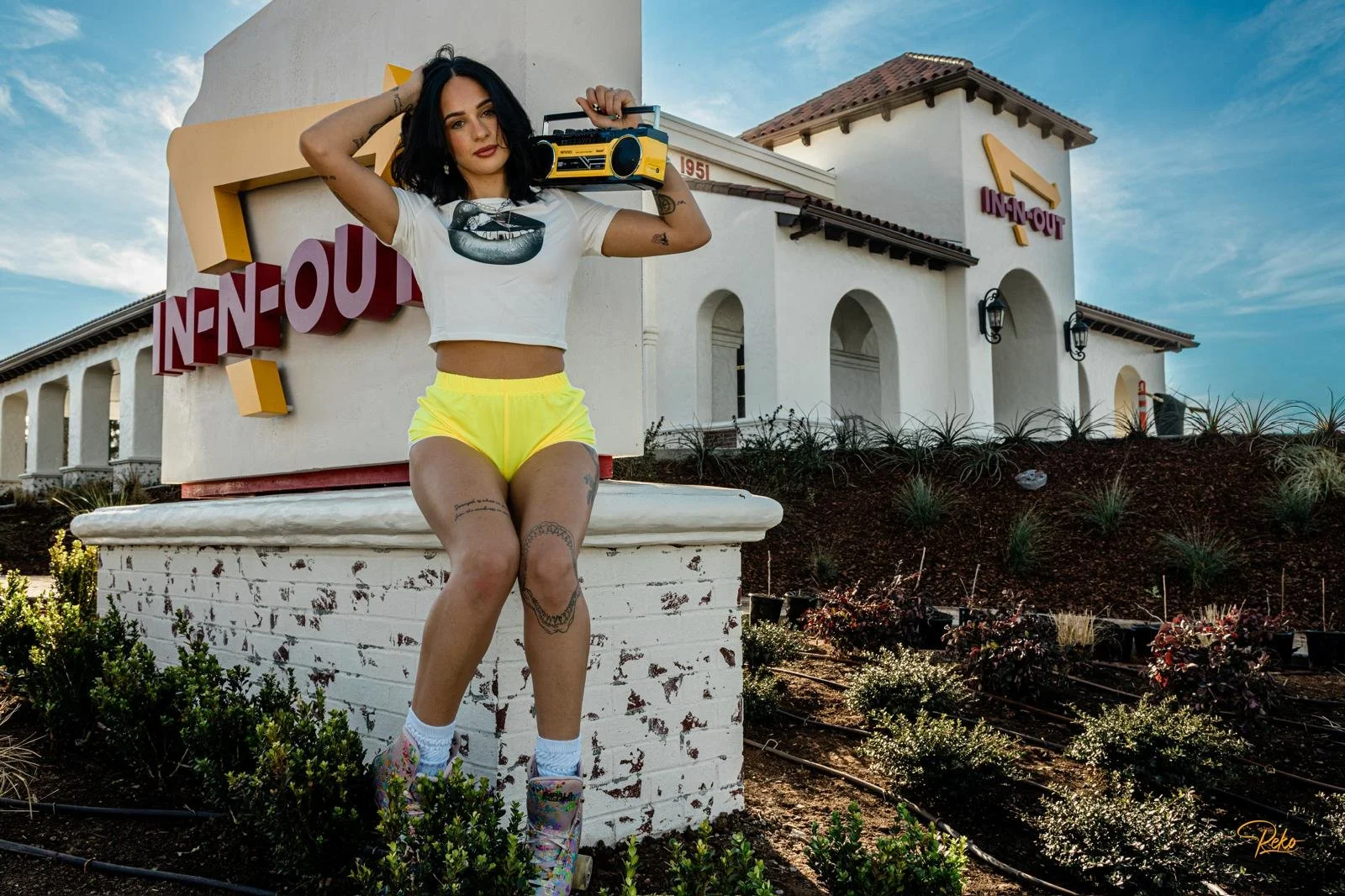
When Inspiration Meets Opportunity: A Test Shoot with Ashtyn
Some shoots come together because of a client brief. Others come together because of a spark of inspiration you just can’t ignore. This one was definitely the latter.

When I first heard the news that IN-N-OUT was officially making its move to Tennessee, my mind immediately started spinning. As someone who loves storytelling through visuals, the idea of blending an iconic West Coast brand with Southern surroundings felt like the perfect creative contrast. I knew I wanted to build a test shoot around that concept—something bold, playful, and unapologetically fun.
That’s where Ashtyn came in.
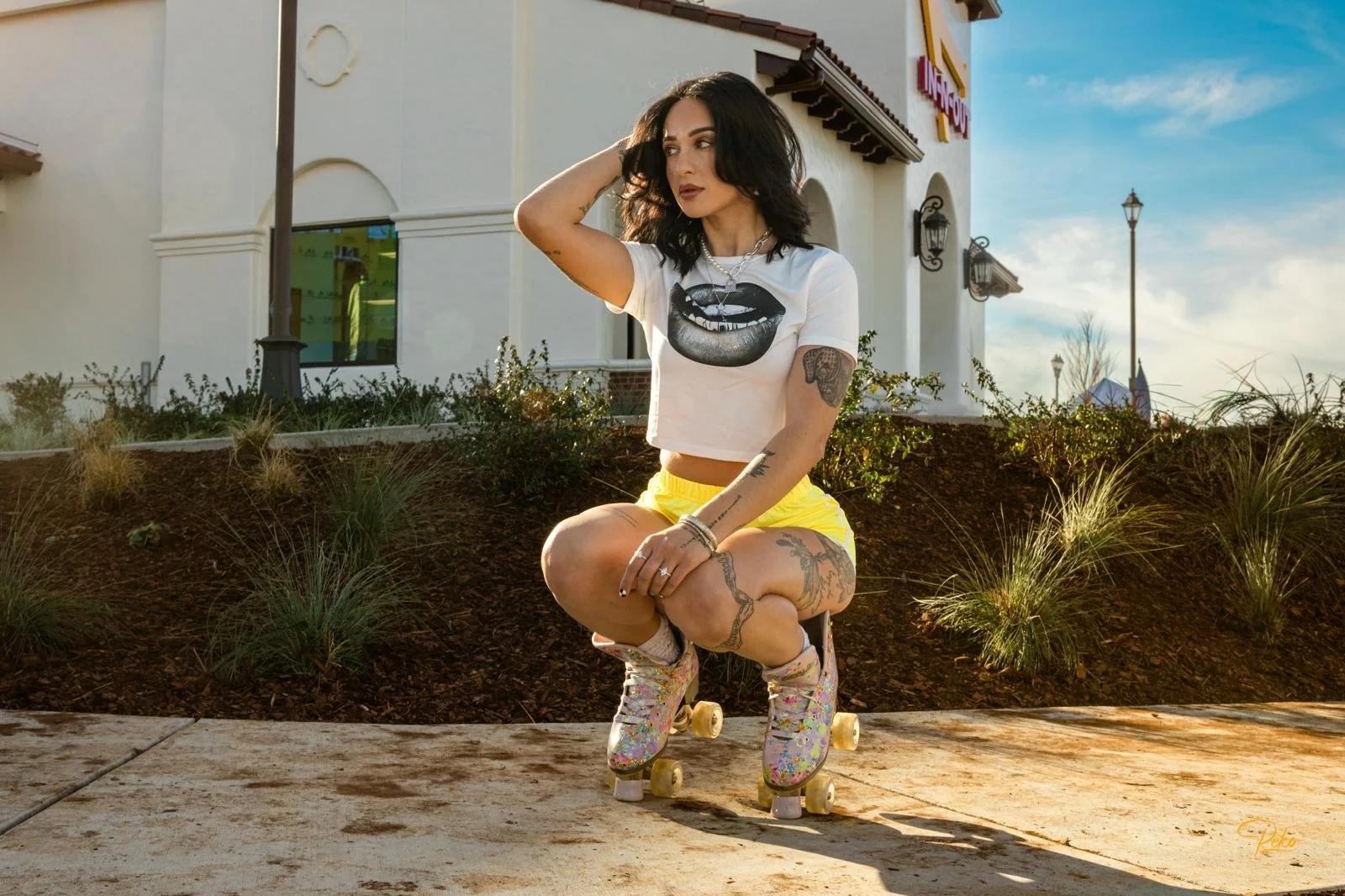
Working with Ashtyn was an absolute blast. From the jump, she brought confidence, energy, and a willingness to lean into the concept fully. Test shoots live and die by collaboration, and she understood the vision instantly. Whether she was rolling up with skates and a boombox or locking into a pose that felt effortlessly authentic, she elevated every frame. Shoots like this remind me how powerful it is when a model trusts the process and brings their own personality into the work.
Building the Shot

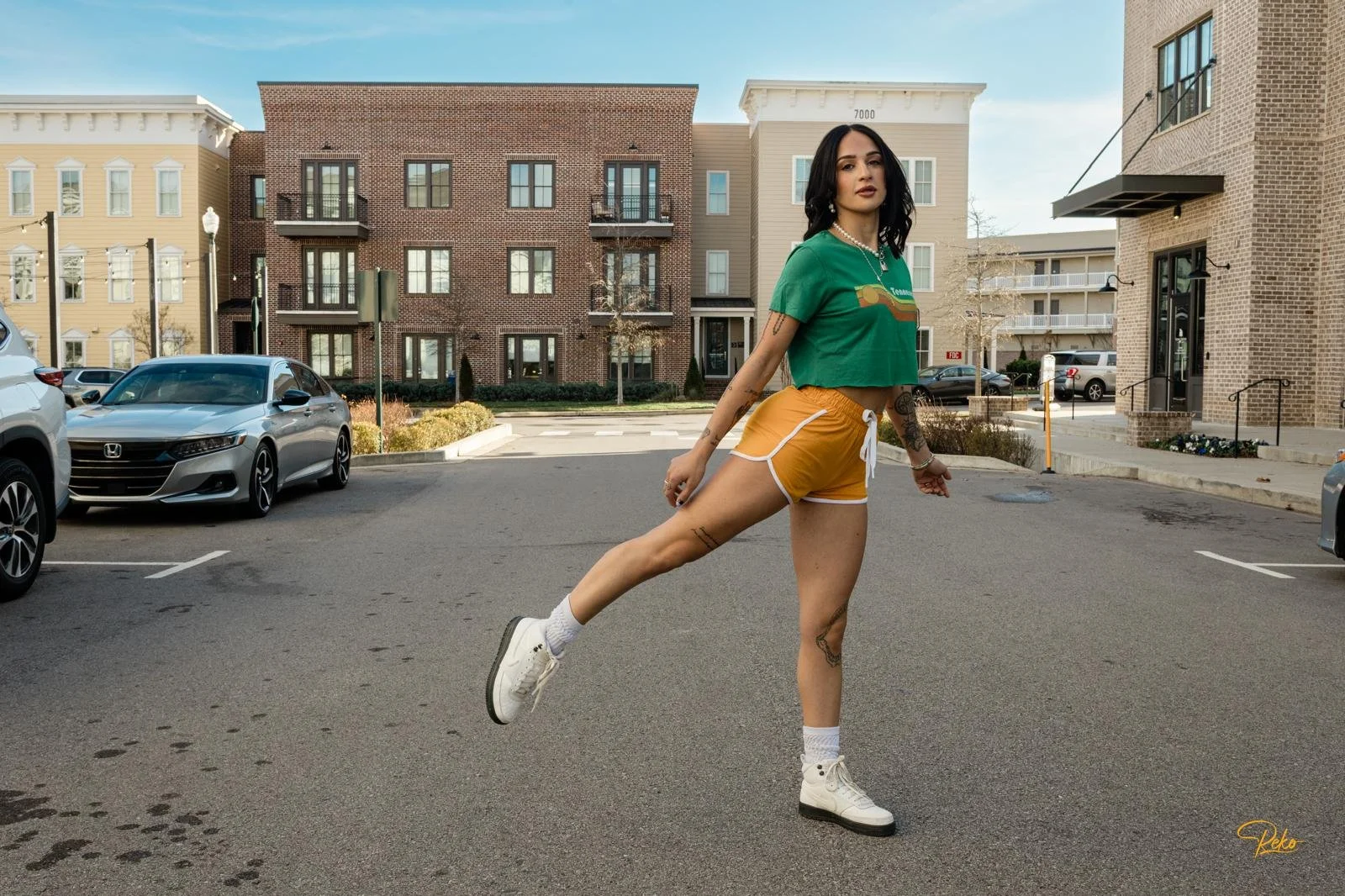
A shoot like this doesn’t just happen on accident. There’s a lot that goes on behind the scenes—location scouting, wardrobe planning, visual references, and figuring out how to tell a story in a single frame. I wanted these images to feel nostalgic but modern, editorial but approachable. The locations were chosen carefully to echo that “new territory” feeling, pairing clean architecture and recognizable signage with movement, attitude, and color.
We kept things loose but intentional. I’m a big believer in letting moments happen naturally once the foundation is set. That’s where the magic lives—in between the planned shots, when the subject relaxes and the scene starts to breathe.
Why I Love Test Shoots
Test shoots like this are a reminder of why I picked up a camera in the first place. They’re about exploration, collaboration, and pushing creative boundaries without limits. They sharpen my eye, fuel new ideas, and often turn into work that speaks louder than any pitch ever could.
Let’s Create Something Together
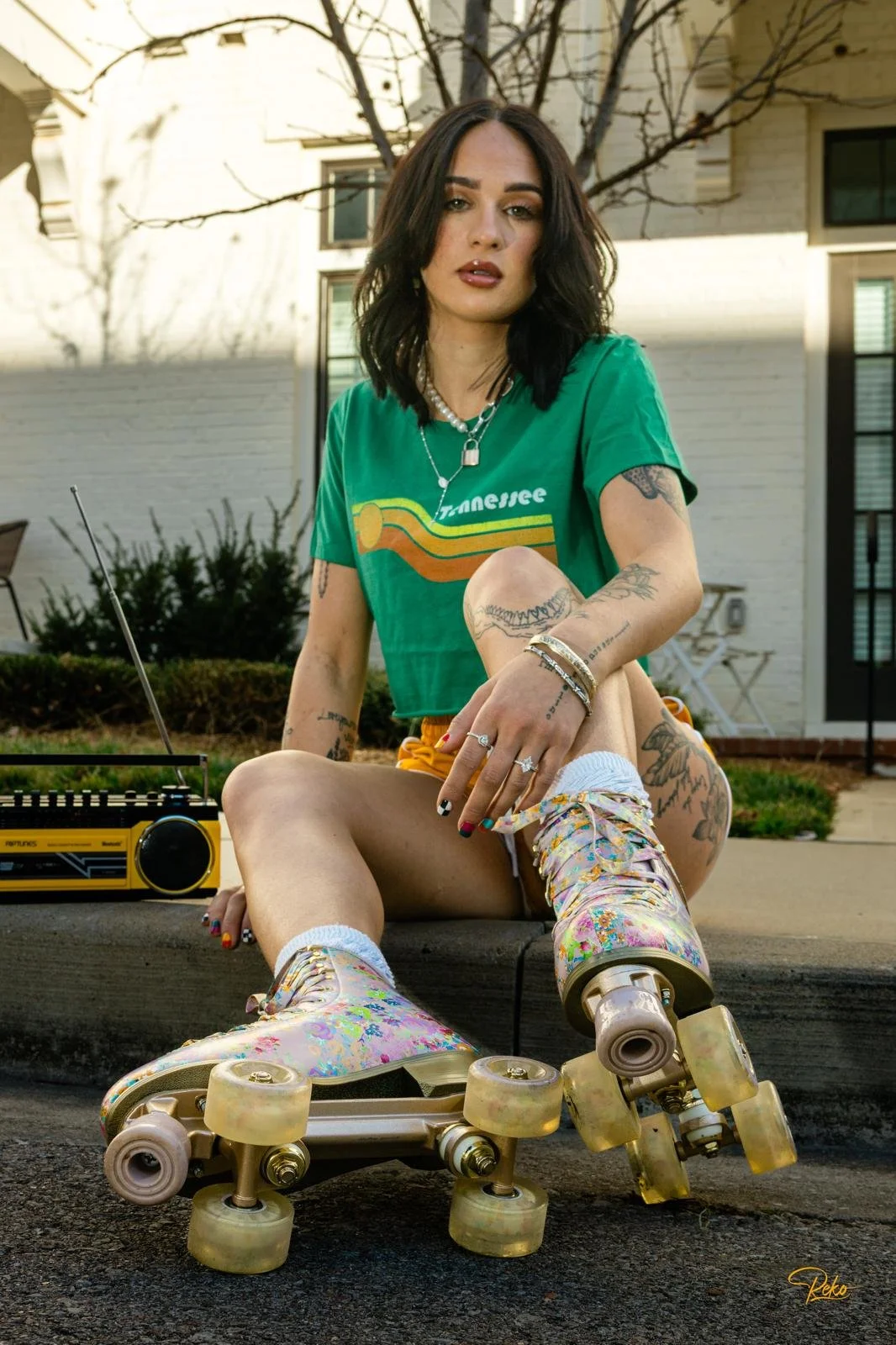
If this shoot resonates with you—whether you’re a High School Senior, a brand, a creative, or someone who simply needs strong visuals—I’d love to connect. From concept development to final delivery, I approach every project with intention, creativity, and respect for the story you’re trying to tell.
If you’ve got an idea, a vision, or even just a question about what’s possible, reach out. Let’s make something meaningful together.
— Reko
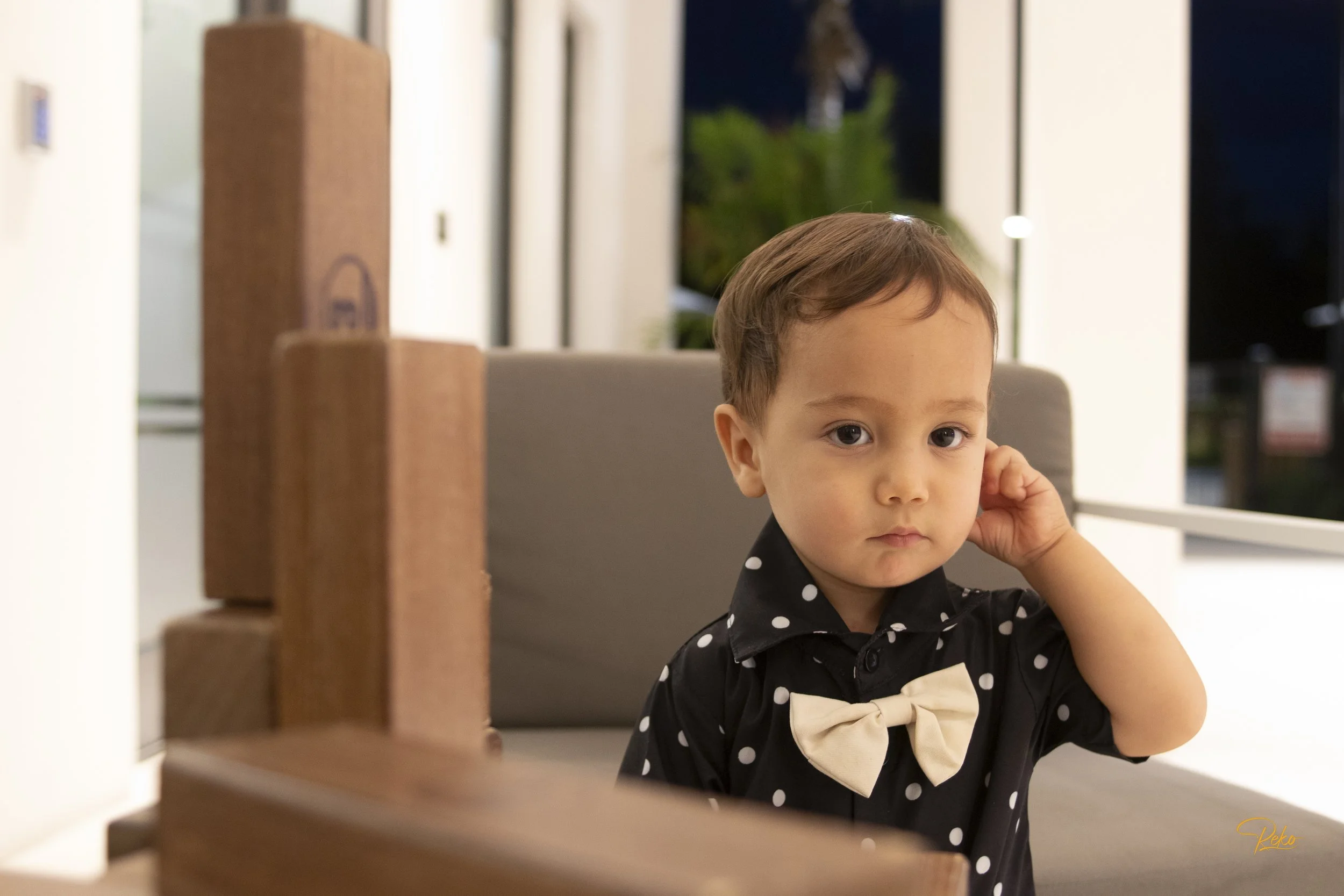
What If My Kids Won't Cooperate During Our Family Portrait Session?
Parents tell me some version of this all the time:
“I'd love family portraits, but my kids will never cooperate.”
Good.
They don't need to.
A successful family portrait session does not require your children to behave like tiny professional models.
They don't need to stand perfectly still.
They don't need to smile on command.
And they definitely don't need to spend the entire session looking directly at my camera.
Your Children Are Allowed to Be Children
One of the biggest misconceptions about family photography is that everyone needs to be perfectly behaved for the photographs to work.
That expectation creates pressure before the session even begins.
Parents start saying things like:
“Don't get dirty.”
“Stand still.”
“Look at the camera.”
“Smile.”
“Stop doing that.”
And eventually everyone becomes frustrated.
I would rather photograph your children being themselves.
That might mean:
exploring
laughing
climbing
running
being shy
sitting with you
making ridiculous faces
taking a break
needing a snack
Those aren't interruptions to the session.
Very often, those are the session.
I Don't Expect Young Children to Pose for an Hour
Children have short attention spans.
That isn't a photography problem. It is simply reality.
So rather than forcing children into a rigid sequence of poses, I work around their attention and energy.
We may photograph everyone together for a few minutes.
Then let the children move.
Then photograph one child with a parent.
Then siblings.
Then everyone comes back together.
The session can change direction according to what is happening.
That's one reason I don't build my family portrait sessions around a rigid time limit.
What If My Child Is Shy?
Then we give them time.
Some children will immediately start talking to me.
Others will look at me like I'm clearly an intruder who has arrived carrying suspicious amounts of camera equipment.
Both are normal.
A shy child doesn't need to perform.
They may stay close to Mom or Dad for a while.
That's useful photographically.
A child holding onto a parent's hand, leaning against them or burying their face into their shoulder can produce photographs that say far more about that stage of life than a perfectly arranged pose ever could.
Eventually most children become curious.
The camera stops being strange.
And we work from there.
What If My Child Has a Meltdown?
Then we stop photographing for a moment.
There is no prize for forcing a tired or overwhelmed child through a photograph.
Sometimes the solution is remarkably complicated:
a snack.
Or water.
Or five minutes without a camera pointed at them.
Parents often interpret a difficult five-minute stretch as meaning the entire session is going badly.
It usually isn't.
I don't need every minute of the session to be perfect.
I need enough genuine moments to create the finished portraits we're after.
Those are two very different standards.
Should We Bribe the Kids?
Small incentives aren't necessarily a problem.
But I wouldn't spend the week before your session telling your children:
“You'd better smile for the photographer.”
That makes the session sound like an upcoming dental procedure.
Instead, keep it simple.
Tell them:
We're going to hang out together and Reko is going to take some pictures of us.
That's enough.
For younger children especially, the less pressure attached to the event, the better.
What Should Parents Do During the Session?
One of the best things you can do is concentrate on your family instead of monitoring their performance.
If I'm photographing your child and they're looking somewhere else, you don't necessarily need to tell them to look at me.
If they're laughing at their brother, let them laugh.
If they're holding onto you, hold them back.
If they're being ridiculous, sometimes being ridiculous with them produces the photograph.
Your job isn't to manage the photography.
That's mine.
Your job is to be with your family.
What If My Kids Don't Like Forced Poses?
Neither do I.
There is a difference between directing a portrait and forcing one.
I may move someone into better light.
I may ask you to stand closer together.
I might reposition a hand or change the way someone is sitting.
I may give your children something to do that creates interaction.
Those little adjustments create stronger photographs.
But I am not trying to turn your family into mannequins.
The goal is a portrait that looks intentional without looking artificial.
What About Clothing?
Clothing can make a major difference, but that doesn't mean everyone needs to wear matching outfits.
During the planning process, we can talk about:
where the finished portrait will hang
colors already present in the room
clothing that works well together
patterns that may distract
comfort
the location
children's personalities
Comfort matters more than many parents realize.
A child wearing something uncomfortable is much less interested in cooperating with anyone.
Where Should We Have the Session?
That depends on your family and what we're creating.
Some children do beautifully outdoors because they can move.
Others are much more comfortable at home.
Some families have a meaningful place they already enjoy together.
Location should serve the portrait—not simply provide an attractive background.
During the planning process we'll talk about both the artwork and the people in it before choosing the location.
What If My Child Has Special Needs?
Tell me before the session.
That information helps me design the experience around your child instead of expecting your child to adapt to a predetermined photography routine.
Useful things to discuss might include:
sensory sensitivities
communication preferences
mobility
anxiety around strangers
noise sensitivity
attention limitations
needed breaks
favorite activities
things that should be avoided
There is no requirement that every family portrait session work the same way.
What If We Don't Get the “Perfect Family Photo”?
We are not trying to manufacture evidence that your family behaves perfectly.
We're trying to make photographs that will matter to you.
Years from now, you are unlikely to care whether your four-year-old's hand was positioned correctly.
You may care enormously about the way they fit against your chest.
Or the way the siblings looked at each other.
Or the expression they made constantly at that age.
Those things disappear remarkably quickly.
That's what I am interested in preserving.
The Goal Is Not Cooperation
The goal is connection.
I need enough structure to create intentional photographs and enough freedom for your family to actually look like your family.
That balance is where good family portraiture lives.
So if you've been postponing family photographs because your children are energetic, shy, stubborn, silly or simply uninterested in posing for a camera:
that's normal.
We can work with it.
Family portrait sessions with Reko Ponton Photography are designed around the family in front of the camera—not around a predetermined set of poses.
Start Your Portrait Planner
How Much Does Custom Family Photography Cost in Franklin & Nashville?
One of the first questions families ask when considering professional portraits is a simple one:
How much does custom family photography actually cost?
The answer depends on what you want to create.
There is a significant difference between hiring a photographer to take photographs and deliver digital files, and working with a photographer to design finished portraits and artwork for your home.
At Reko Ponton Photography, I approach family photography from the second perspective.
We don't begin by asking, “Where should we take pictures?”
We begin with:
What do you want these photographs to become?
Family Portrait Sessions Begin at $350
My family portrait session fee is $350.
I intentionally do not place a strict time limit on the session. I also photograph only two portrait sessions in a day so that we aren't watching the clock or rushing children through a predetermined schedule.
The objective is to create what your family needs—not see how many photographs we can make in 45 minutes.
The session fee covers the photography experience itself.
Finished artwork is selected separately.
Why Is Artwork Priced Separately?
Every family is different.
One family may want a single large portrait above the fireplace.
Another may want three coordinated pieces running along a hallway.
Another may discover that an album makes more sense because they want to preserve a larger collection of photographs.
So instead of building the cost of products you may not want into the session fee, we determine what makes sense for your home and family.
That is why I like to think about the finished artwork before the photography session.
What Does Professional Wall Art Cost?
The cost depends primarily on:
size
framing
material and finish
whether you choose one piece or a collection
custom design requirements
As a general guide, professionally produced wall portraits can range from several hundred dollars for smaller finished pieces to $1,000 or more for substantial statement artwork and multi-piece collections.
Larger custom installations can go beyond that.
That range is intentional.
A 16×20 piece intended for a bedroom or hallway serves a very different purpose from a 30×40 portrait designed to anchor a living room.
What About Albums?
Albums are often a good choice when one photograph cannot tell the whole story.
Instead of selecting a single image, an heirloom album allows us to preserve:
individual portraits
sibling relationships
parents with children
candid interactions
details
the complete visual story of the session
Professional albums typically represent a larger investment than an individual small wall portrait because they combine many photographs, custom design, professional printing and handcrafted construction.
During your consultation, we can determine whether an album, wall art or a combination makes the most sense.
Why Does Custom Photography Cost More Than Digital-Only Photography?
With digital-only photography, the final product is usually a collection of files.
With a design-first portrait experience, photography is only one part of the process.
There is also:
planning
location selection
wardrobe guidance
photography
image selection
professional editing
artwork design
sizing
framing and product selection
professional printing
quality control
delivery and, when appropriate, installation planning
You are not simply purchasing photographic paper or a frame.
You are purchasing the process required to determine what belongs in your home and then create it.
What Does a Typical Family Spend?
There really isn't one “typical” family because the artwork varies considerably.
A family wanting one modest portrait will invest differently from a family designing a large living-room collection.
That's why I prefer not to begin by selling a package.
Instead, we start with the space.
Walk through your home and look at the walls above:
your sofa
fireplace
staircase
hallway
bed
dining area
Then ask:
What story about our family should live here?
Once we know the answer, it becomes much easier to determine an appropriate size and budget.
Do I Have to Purchase Wall Art?
No.
The goal is not to convince every family to put an enormous portrait over the fireplace.
The goal is to determine how you actually want to enjoy your photographs.
For some families that means a statement portrait.
For others it might be:
A Signature Series
Three coordinated pieces designed together.
A Gallery Wall
Several photographs arranged as one installation.
An Heirloom Album
A complete collection designed to be held, shared and eventually passed down.
The right answer depends on your family and your home.
Why Start With the Wall?
Most people approach family photography in this order:
Hire a photographer.
Pick a location.
Take photographs.
Receive images.
Eventually decide what to do with them.
And step five often never happens.
The photographs stay on a phone, computer or cloud account.
I reverse that process.
We start by deciding what you would love to see in your home.
Then we create the photography specifically for that purpose.
My Franklin Family Artwork Guide summarizes it simply: instead of planning only the photo session, plan the finished artwork you want living in your home.
Where Does Reko Ponton Photography Work?
I photograph families throughout Franklin, Williamson County, Nashville and surrounding Middle Tennessee communities.
Sessions can be designed around your home, an outdoor location or somewhere meaningful to your family.
And they don't have to look like conventional family portraits.
If your family's story belongs on a farm, downtown, beside the water, in your home—or somewhere completely unexpected—we can build around that.
The Best Place to Begin
Before deciding how much you should spend, determine what you want to create.
Look around your home.
Find one wall that feels unfinished.
Then imagine seeing your family there every day.
That is where the planning begins.
Family portrait sessions with Reko Ponton Photography begin at $350, with finished artwork purchased separately.
Start your Portrait Planner

More Than a Photoshoot: A Different Kind of Photography Experience
Create more than photos. A Franklin TN family photographer designing intentional portraits that become meaningful artwork—crafted to live in your home for generations.
Most people think they need a photoshoot.
A date on the calendar.
A location.
Outfits planned.
And then… photos.
But what happens next?
Where Most Photography Ends
For most families, the process looks like this:
Photos are taken.
A gallery is delivered.
A few favorites are downloaded.
And then life moves on.
The images sit:
On a phone
On a hard drive
Somewhere in the cloud
Rarely revisited.
Rarely experienced.
Not because they don’t matter — but because there was never a plan for them to live anywhere.
A Different Starting Point
My work begins somewhere else entirely.
Not with the session.
But with a question:
What do you want this to become?
Because when you start there — everything changes.
Designing Artwork for Your Home
Instead of simply taking photos, I guide you through a process of creating finished artwork designed specifically for your home.
We look at:
The spaces in your home that feel incomplete
The stories you want represented
The people and relationships that matter most
From there, we design something intentional.
A statement piece.
A series.
An heirloom collection.
Something that doesn’t just exist — but belongs.
The Experience
The session itself becomes part of a larger process.
You’re not left wondering:
What to wear
Where to go
How it will turn out
Everything is guided with the final artwork in mind.
So when the session happens, it feels natural.
Unrushed.
Intentional.
Focused on connection, not performance.
From Images to Something That Lasts
After your session, we don’t just deliver files.
We refine, select, and design.
Together, we create pieces that:
Fit your space
Reflect your family
And hold meaning beyond the moment
Because a photograph shouldn’t just be seen once.
It should live with you.
Why This Matters
Life moves quickly.
Seasons change.
Children grow.
Moments pass.
And while photos can capture those moments — Only finished artwork keeps them present.
Daily.
Visibly.
Meaningfully.
Who This Is For
This experience is for families who want more than just pictures.
Who value:
Intention over convenience
Meaning over volume
And legacy over digital storage
Because what we create together isn’t just for today.
It’s for the years that follow.
Let’s Create Something That Lives With You
If you’ve been thinking about updating your family portraits — or creating something meaningful for your home —I’d love to walk through that process with you.
👉 Message me directly to learn more about the experience
👉 Or reach out to schedule a consultation and begin designing your artwork
-Reko Ponton

The Difference Between a Photographer and a Dude With a Camera
Discover what sets a professional photographer apart in Franklin and Nashville. Learn how intentional photography becomes timeless family artwork for your home.
Today, almost everyone has a camera.
It’s in your pocket.
It’s fast.
It’s capable of producing beautiful images with almost no effort.
So the question becomes:
What’s the difference between a professional photographer… and just a dude with a camera?
It’s Not About the Camera
The truth is, the gap isn’t technical anymore.
It’s not:
Who has the better gear
Who shoots in manual
Or who can edit a photo well
Those things matter—but they’re not what separates someone.
The real difference is this:
Intent.
Anyone Can Take a Photo
Not Everyone Creates Something Meaningful
A “dude with a camera” captures what’s in front of them.
A photographer thinks beyond the moment.
They consider:
How images connect together
What story they’re telling
What the final result becomes
Because photography isn’t just about individual images—
It’s about creating something that has cohesion, purpose, and meaning.
The Difference Shows Up After the Session
Most people don’t realize this:
The biggest difference isn’t what happens during the shoot.
It’s what happens after.
A casual photographer delivers files.
A professional designs:
Where those images will live
How they will be experienced
What they will mean years from now
Because without that step, even great images disappear.
From Images to Artwork
This is where everything changes.
If the end result is:
A folder of images
A link to download
A gallery that gets revisited once or twice
Then the experience ends there.
But when the goal is:
A statement piece on your wall
A series that tells your family’s story
Something your children grow up seeing every day
Now it becomes something else entirely.
It becomes artwork.
Thought vs. Convenience
A “dude with a camera” relies on convenience.
Quick shoot.
Quick delivery.
Move on to the next.
A photographer slows things down.
They think about:
Light
Emotion
Composition
Environment
And most importantly—why it matters
Because the goal isn’t speed.
It’s significance.
Why This Matters for Your Family
Here’s the reality:
You don’t need more photos.
You already have thousands.
What most families are missing is something that actually stays present in their lives.
Something intentional.
Something designed.
Something that doesn’t get lost in “The Cloud.”
That’s the difference.
A Different Approach
This is why I don’t start with a photoshoot.
I start with a question:
What do you want this to become?
Because when you begin with the end in mind—
everything changes.
The session feels different.
The images feel different.
The result lasts.
Not Just a Photographer
I don’t see my role as just taking photos.
I see it as:
Designing something meaningful
Creating with intention
And helping families turn moments into something that lives with them every day
Because the goal was never just to take pictures.
It’s to make sure they matter.
An Invitation
If you’ve been thinking about creating something more intentional for your family—
Not just images, but something that belongs in your home—
I’d love to help you design that.
👉 Visit my website to learn more
👉 Or schedule a consultation and we’ll create something that lasts
- Reko Ponton

Why My Faith Is at the Center of My Art
Nashville and Franklin family photographer creating faith-driven, custom wall art. A refined portrait experience designed to preserve your family’s legacy.
There’s something I’ve come to understand over time—
not all at once, but slowly, through different seasons of life.
Before Nashville… before this business… before families gathered around finished artwork—
There was a foundation being formed.
Not just in photography,
but in how I see people… and why what I create matters.
Created in His Image
I believe something simple, but life-changing:
We are created in the image of God.
And because of that—
we are creators.
Not by accident.
Not as a hobby.
But as part of how we were designed.
The ability to notice beauty…
to feel meaning…
to create something that didn’t exist before—
That comes from Him.
Where It Became Real for Me
There was a time in my life when moments felt fragile in a way that’s hard to explain unless you’ve lived it.
As a Combat Medic in Iraq, I carried a camera alongside everything else.
What I saw wasn’t abstract.
It was immediate. Final.
There’s no retake in those moments.
No second chance to capture it better later.
That perspective stays with you.
And in a way, it shaped how I see everything now.
From Capturing to Creating
When I came home and continued in photography as a Photojournalist with a local Nashville Newspaper and magazine, I began to realize something:
Taking pictures wasn’t enough.
Because the question isn’t just:
“Is this a good image?”
It’s:
“Does this matter?”
And deeper than that—
“Where does this live?”
That’s where my faith and my work began to come together.
Because if we are created by God with purpose…
then what we create should carry purpose too.
Why Family Matters So Much
When I photograph a family, I don’t just see a moment.
I see something God designed.
Connection.
Relationship.
Legacy.
These aren’t random accidental moments.
They’re meaningful.
And they’re worth preserving in a way that reflects that.
Not just digitally.
Not just temporarily.
But in a way that stays present in your home, in your life, every day.
Creating With Intention
Most of the world moves fast.
Photos are taken quickly.
Shared quickly.
Forgotten just as quickly.
But I don’t believe that’s what these moments are meant for.
Because if we are creating in the image of God—
then creating should be intentional.
Thoughtful.
Lasting.
Honoring what’s been given to us.
That’s why I don’t start with a photoshoot.
I start with the end in mind:
What will this become?
What will this mean years from now?
A Quiet Influence, Present in Everything
My faith isn’t something I separate from my work.
It’s woven into it.
In how I see your family.
In the care I take creating your artwork.
In the belief that what we’re doing matters beyond just today.
Not loudly.
But consistently.
What I Hope You Feel
If you choose to work with me, my hope isn’t just that you love your images.
It’s that you feel:
Seen
Valued
And reminded of what matters most
Because at the end of the day, this isn’t just about photography.
It’s about creating something that reflects the life you’ve been given.
An Invitation
If this resonates with you—
if you’ve been wanting something more intentional for your family—
I’d love to create that with you.
Visit my website to learn more
Or schedule a conversation and we’ll begin designing something meaningful together

I Didn’t Start as a Family Photographer
My journey to Family Art Photographer
Before Nashville… before families gathered around finished artwork—
I learned to see life in a very different way.
As a Combat Medic, I carried a camera alongside everything else during the war in Iraq.
I captured moments I witnessed—moments that weren’t abstract.
They were immediate. Fragile. Final.
There’s no retake in those situations.
No second chance to capture it better later.
That perspective never leaves you.
When I returned home I had to capture life…, photography stayed—but the purpose evolved.
As a photojournalist in Nashville, TN, my work became about observation.
Not creating moments… but recognizing them.
Learning to step back.
To let life unfold without interference.
To understand that the most meaningful images are rarely staged—
they’re noticed.
Then came a different chapter.
The ocean.
In the Cayman Islands, photography became something else entirely—
less about urgency… more about immersion.
Weightless. Quiet. Surrounded by a kind of beauty most people never experience firsthand.
Light moved differently.
Time felt slower.
The work became art in its purest form.
I captured thousands of beautiful images underwater. But over time, something became clear.
Beautiful images… weren’t enough.
Because the question wasn’t just:
“Is this a powerful image?”
It became:
“Where does this live?”
And that question changed everything.
Today, based in Franklin / Nashville, Tennessee, my work is no longer about chasing images.
It’s about creating something that stays.
Because most families don’t mean to lose their memories to their phones—
it just happens.
Life moves fast.
Photos get taken.
And then… they disappear to “The Cloud”.
My work exists to interrupt that.
To take what matters most—
your Family, your Relationships, This Season of Life—
and turn it into something tangible.
Something intentional.
Something designed to live in your home… not in your camera roll.
piece of art that will be handed down generation to generation.
This isn’t about a photo session.
It’s about what remains years from now—
when the moment has passed, but the meaning hasn’t.
Because the goal was never just to take pictures.
It’s to make sure they matter.
Reko Ponton Photography
Franklin / Nashville, Tennessee
Family portrait artwork designed to live on your walls—and last far beyond the moment.

The Truth About Hiring a Professional Photographer (That No One Really Talks About)
It All Begins Here
If you’ve ever scrolled through Instagram and thought,
“Wow… photography must be such a dream job,”
you’re not wrong.
It can be beautiful.
It can be creative.
And yes—sometimes it really does look effortless.
But there’s a side of professional photography that rarely gets talked about…
and understanding it might completely change how you choose a photographer.
What You See vs. What You’re Actually Investing In
When you see a finished image, you’re seeing the final 1%.
What you don’t see:
The planning behind the scene
The lighting decisions made in seconds
The years of experience that guide every choice
The intentional editing that brings everything together
A photograph may feel simple.
But creating one that feels timeless, natural, and meaningful—
that’s anything but accidental.
Photography Isn’t About “Taking Pictures”
There’s a common assumption that photographers are simply capturing what’s already there.
In reality, a professional photographer is constantly:
Reading light
Directing subtle movement
Anticipating moments before they happen
Solving problems in real time
It’s less about clicking a button…
and more about crafting an experience that leads to something lasting.
Why Experience Changes Everything
Anyone can take a photo.
But not everyone can:
Make you feel comfortable in front of the camera
Guide you without making it feel staged
See what will matter years from now, not just today
This is where experience matters most.
Because the goal isn’t just a “good photo”—
it’s creating something that still feels meaningful when life has moved forward.
The Part Most People Overlook
Here’s what I’ve learned after years behind the camera:
Most families don’t struggle with taking photos…
they struggle with what happens after.
Images live on phones.
On hard drives.
On “we’ll get to it someday” lists.
And before long, those moments quietly disappear into the background.
That’s why my approach is different.
We don’t start with the session.
We start with the end result.
What will live in your home.
What your children will grow up seeing.
What becomes part of your everyday environment.
Because when you design with intention,
the entire experience changes.
What You’re Really Choosing
When you hire a photographer, you’re not just choosing a style.
You’re choosing:
How the experience will feel
How guided (or unguided) the process is
Whether anything meaningful is created beyond the session
The difference isn’t always obvious upfront.
But it becomes very clear later.
Why This Matters More Than Ever
We live in a time where thousands of photos are taken every year…
and very few are truly kept.
The families I work with aren’t looking for more images.
They’re looking for:
Something intentional
Something finished
Something that actually becomes part of their home
Because those are the pieces that last.
A More Thoughtful Way to Approach Photography
If you’re considering a session, here’s a simple shift:
Instead of asking,
“When should we take photos?”
Ask:
“What do we want this to become?”
That one question changes everything.
Let’s Create Something That Lasts
If you’ve been thinking about updating your family portraits—or finally creating something meaningful for your home—I’d love to guide you through the process.
You don’t need to have it all figured out.
That’s what I’m here for.